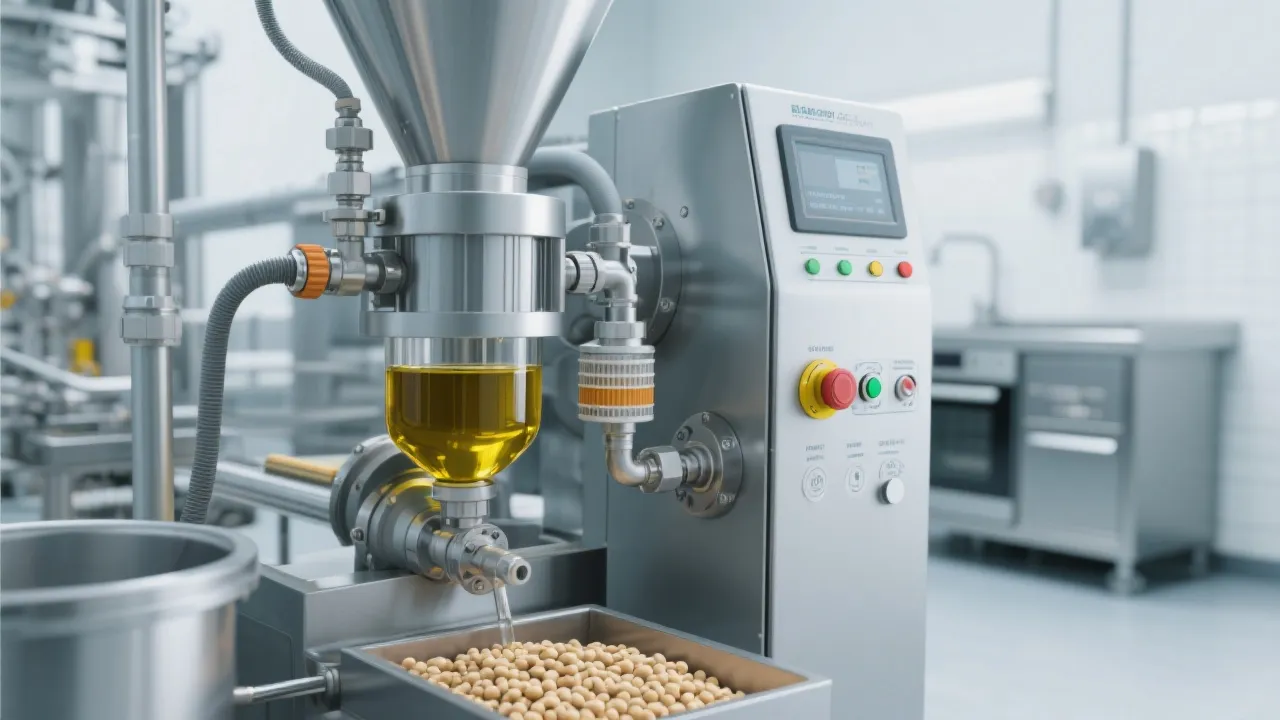
In today’s competitive edible oil market, choosing between cold-press and hot-press extraction isn’t just a technical decision—it’s a strategic one that impacts product quality, production cost, and long-term scalability. For small to mid-sized manufacturers, understanding the real-world differences in nutrient retention, energy efficiency, and operational complexity is key to aligning your process with both customer expectations and business goals.
Cold pressing uses mechanical pressure at temperatures below 40°C to extract oil from seeds or nuts without applying heat. This method preserves delicate nutrients like omega-3s, antioxidants, and natural flavors—ideal for premium health-conscious oils such as flaxseed, olive, or walnut oil. In contrast, hot pressing involves heating raw materials (typically to 70–90°C) before pressing, which increases yield but may degrade heat-sensitive compounds.
| Factor | Cold Press | Hot Press |
|---|---|---|
| Nutrient Retention | High (up to 95% of original phytonutrients) | Moderate to Low (some vitamins degraded) |
| Oil Yield (%) | 65–75% | 80–90% |
| Energy Consumption | Lower (~30% less than hot press) | Higher due to pre-heating |
| Labor Intensity | Low (semi-auto systems available) | Moderate (requires monitoring temperature) |
If your target market includes premium retailers, health food brands, or export customers seeking “cold-pressed” labels, cold pressing offers a clear value proposition—even if it means slightly lower yields. On the other hand, if you’re producing bulk oils for restaurants, food processors, or institutional buyers, hot pressing delivers better ROI through higher throughput and reduced per-unit costs.
A small-scale soybean oil producer in Guangdong switched from traditional hot pressing to a dual-mode system after analyzing their client mix. By using cold press for specialty organic oils (sold to European supermarkets) and hot press for commodity-grade batches (distributed locally), they achieved a 22% increase in overall revenue within six months while reducing average energy consumption by 37%. Their workforce also reported fewer maintenance issues—a direct benefit of modernized automation.
Myth: “Cold pressing always costs more.”
Reality: While initial equipment investment might be higher, ongoing savings in energy, labor, and waste reduction often offset this over time—especially when targeting high-margin markets.
Myth: “Hot pressing ruins all nutritional benefits.”
Reality: Not necessarily. With precise temperature control and shorter processing times, many hot-pressed oils retain sufficient functionality for industrial applications where flavor and aroma are secondary to consistency and cost-efficiency.
Explore our fully automatic cold-hot dual-mode oil press designed for flexibility across different oil types—from cold-pressed chia seed oil to high-volume sunflower oil. Whether you're scaling up or refining your niche, this solution supports both quality and efficiency.
See How It Works →


.png?x-oss-process=image/resize,h_100,m_lfit/format,webp)
.png?x-oss-process=image/resize,h_100,m_lfit/format,webp)
.png?x-oss-process=image/resize,h_100,m_lfit/format,webp)