In the global edible oil market, especially for export - oriented enterprises, the processing technology of edible oil directly affects product quality, market competitiveness, and production efficiency. With the continuous improvement of consumer requirements for food safety and quality, as well as the increasingly strict international food safety regulations, edible oil production enterprises are facing unprecedented challenges. For medium - sized edible oil production enterprises, how to upgrade technology, improve production efficiency, and ensure product quality has become an urgent problem to be solved. The multi - stage fine filtration system emerged in this context, which can effectively meet the current needs of the edible oil processing industry.
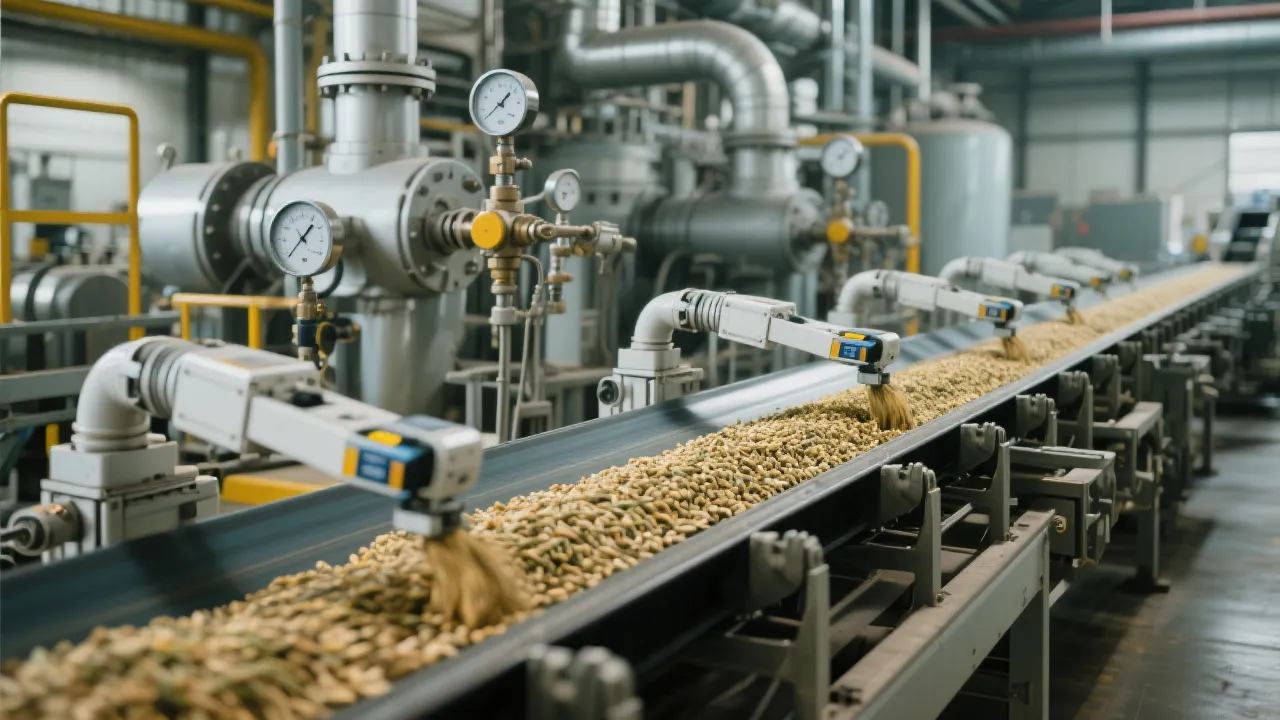
The multi - stage fine filtration system is designed based on the principle of gradually filtering impurities of different particle sizes. Through a series of pre - designed filter layers, it can filter out large - sized impurities in the first stage, such as sediment and solid particles. According to relevant data, in the initial stage of filtration, it can remove more than 90% of large - sized impurities with a particle size greater than 100 microns. In the subsequent stages, the system can further filter out smaller impurities, such as colloids and fine particles, ensuring that the final oil product meets strict safety standards. For example, it can reduce the content of impurities with a particle size of 1 - 10 microns to less than 1%.
Let's take an actual medium - sized edible oil production enterprise as an example. Before using the multi - stage fine filtration system, the oil produced by the enterprise had problems such as a turbid appearance and a short shelf - life. After the introduction of the multi - stage fine filtration system, the oil became clear and transparent, and the taste was significantly improved. At the same time, the system can effectively protect the nutritional components in the oil, such as vitamins and unsaturated fatty acids. Research shows that after filtration by the multi - stage fine filtration system, the retention rate of vitamin E in the oil can reach more than 95%, which is much higher than that of the traditional filtration method. In addition, the shelf - life of the oil has also been extended from the original 6 months to 12 months, which greatly reduces the risk of product spoilage during the sales process.
The multi - stage fine filtration system also has significant advantages in reducing equipment maintenance and labor costs. Since the system can effectively remove impurities in the oil, it reduces the wear and tear of equipment caused by impurities, thereby reducing the frequency of equipment maintenance. According to the statistics of some enterprises, after using the multi - stage fine filtration system, the equipment maintenance frequency can be reduced by 30% - 50%. At the same time, the automated operation of the multi - stage fine filtration system also reduces the demand for manual operation, which can save about 20% - 30% of labor costs for enterprises.
In summary, the multi - stage fine filtration system has comprehensive advantages in improving oil purity, protecting oil nutrition, ensuring food safety, and improving production efficiency. With the continuous development of the edible oil industry, the multi - stage fine filtration technology will also continue to innovate and improve. In the future, it is expected to achieve more accurate impurity removal, greater energy savings, and better adaptability to different types of oil processing.
If you are interested in the latest edible oil processing technology and want to significantly improve the quality and efficiency of your production, don't miss our energy - efficient fully automatic cold and hot oilseed press! Click here to learn more!
 Cold pressing technology advantages and disadvantages
Comparison of hot pressing oil extraction processes
Edible oil production technology
Energy-saving advantages of oil presses
Oil extraction technology
segmented cage design
residue reduction in screw oil press
oil press maintenance optimization
cold and hot pressing efficiency
screw press equipment durability
automated oil press machine
cold hot press oil expeller
small oil mill equipment
energy-efficient oil extraction
edible oil processing equipment
energy saving screw oil press
dual screw axis meshing
efficient oil extraction
oil press maintenance
cold press vs hot press
multi-stage filtration system
edible oil processing
oil press maintenance cost
cold and hot pressing oil machine
oil production efficiency
Cold pressing technology advantages and disadvantages
Comparison of hot pressing oil extraction processes
Edible oil production technology
Energy-saving advantages of oil presses
Oil extraction technology
segmented cage design
residue reduction in screw oil press
oil press maintenance optimization
cold and hot pressing efficiency
screw press equipment durability
automated oil press machine
cold hot press oil expeller
small oil mill equipment
energy-efficient oil extraction
edible oil processing equipment
energy saving screw oil press
dual screw axis meshing
efficient oil extraction
oil press maintenance
cold press vs hot press
multi-stage filtration system
edible oil processing
oil press maintenance cost
cold and hot pressing oil machine
oil production efficiency






.png?x-oss-process=image/resize,h_100,m_lfit/format,webp)
.png?x-oss-process=image/resize,h_100,m_lfit/format,webp)
.png?x-oss-process=image/resize,h_100,m_lfit/format,webp)