If you're running a small oil press operation—whether it's a family-run workshop or a growing local business—you know that choosing the right peanut and sesame oil press isn't just about price. It’s about matching your raw material characteristics (like moisture content and particle size) with precise machine settings to maximize yield, reduce waste, and ensure consistent oil quality.
Cold pressing preserves more natural flavors, nutrients, and antioxidants—ideal for premium oils sold in health-conscious markets like Germany, Canada, or the U.S. But it requires higher pressure and slower processing speeds. In contrast, hot pressing (typically 70–90°C) boosts extraction efficiency by up to 25%, especially for dried seeds like sesame. However, over-heating can degrade flavor compounds—a common mistake among new operators.
💡 Pro Tip: For every 1% increase in seed moisture above 8%, you’ll need to increase hydraulic pressure by ~5% to maintain optimal output. Our data from 30+ real-world installations shows this rule holds across both home-scale and commercial setups.
Here’s where many buyers fail: they buy a “high-output” press without adjusting for their actual input. If your peanuts are coarse (larger than 4mm), use a lower RPM (around 60–80 rpm) and higher torque to avoid damaging fibers. For fine sesame powder (<2mm), go faster (90–120 rpm) but with controlled heat management.
📊 Real Data Point: A typical 3kW cold-press unit operating at 80 rpm with properly sized feedstock achieves 92% oil recovery from medium-moisture (6–8%) peanuts. Switch to 120 rpm with dry sesame (<4% moisture), and output jumps to 95%—but only if temperature is monitored closely.
You might think bigger motor = better performance—but not always. Modern energy-efficient presses now feature variable frequency drives (VFDs) that cut electricity use by up to 40% compared to older models. That means less wear on components and lower monthly utility bills—especially important for users in regions like India or Southeast Asia where power costs are rising.
✅ Key Metric: Look for machines rated under 2.5 kW per kg/hour of throughput. Anything above that suggests inefficiency—or poor design.
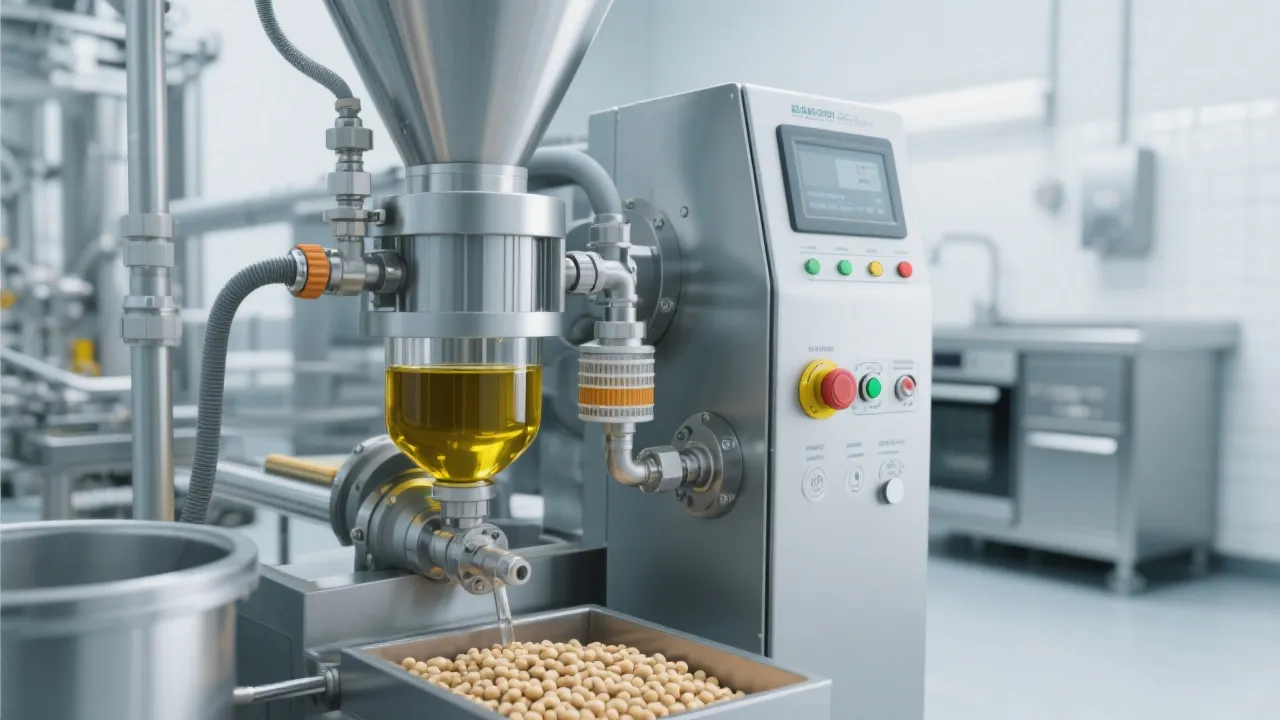
Even the best press won’t produce clear oil without proper filtration. A three-stage system—mesh pre-filter → ceramic cartridge → activated carbon—is essential for removing phospholipids, free fatty acids, and residual solids. This setup extends shelf life from 3 months to over 12 months when stored correctly.
🔧 Maintenance Hack: Replace the ceramic filter every 50 hours of operation—it’s cheaper than fixing cloudy oil complaints from retailers.
❓ What’s your raw material like? Is your sesame dry and fine—or moist and chunky? Share your specs below—we’ll help match you to the ideal machine type.
Let every grain of oil be worth its weight in gold—with smart selection, not guesswork.
Get Your Customized Equipment Recommendation Now spiral oil press machine
wear-resistant materials
equipment durability
maintenance frequency reduction
equipment maintenance tips
wear-resistant materials for screw oil press
screw oil press machine maintenance
extending oil press lifespan
high-efficiency oil extraction equipment
reducing equipment downtime
cold press oil extraction
hot press oil processing
oilseed expeller machine
edible oil production optimization
efficient oil pressing technology
multi-stage filtration system
edible oil processing
oil purity improvement
shelf life extension
energy-efficient oil press
fully automatic oil press
hot and cold pressing technology
medium - sized edible oil production
energy - saving oil - pressing equipment
oilseed pressing mode selection
spiral oil press machine
wear-resistant materials
equipment durability
maintenance frequency reduction
equipment maintenance tips
wear-resistant materials for screw oil press
screw oil press machine maintenance
extending oil press lifespan
high-efficiency oil extraction equipment
reducing equipment downtime
cold press oil extraction
hot press oil processing
oilseed expeller machine
edible oil production optimization
efficient oil pressing technology
multi-stage filtration system
edible oil processing
oil purity improvement
shelf life extension
energy-efficient oil press
fully automatic oil press
hot and cold pressing technology
medium - sized edible oil production
energy - saving oil - pressing equipment
oilseed pressing mode selection


.png?x-oss-process=image/resize,h_100,m_lfit/format,webp)
.png?x-oss-process=image/resize,h_100,m_lfit/format,webp)
.png?x-oss-process=image/resize,h_100,m_lfit/format,webp)
.jpg?x-oss-process=image/resize,h_800,m_lfit/format,webp)