
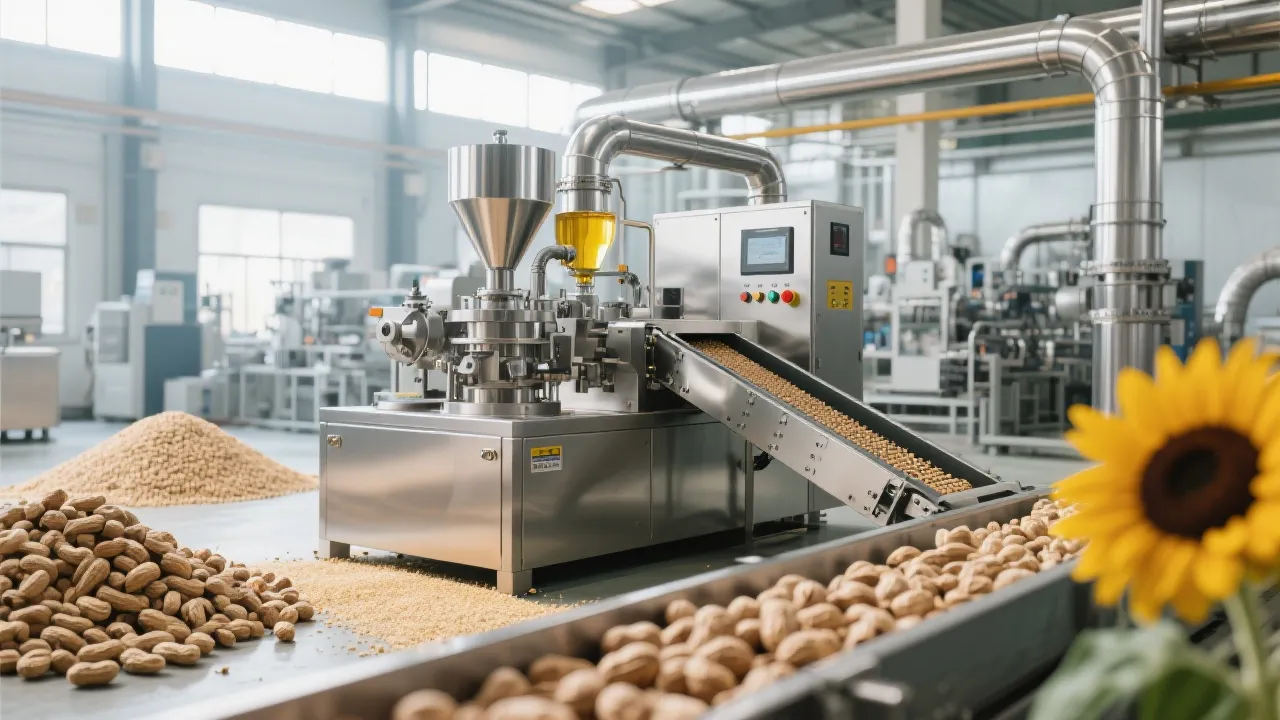
For food processors and oilseed manufacturers targeting global markets, the choice of equipment isn’t just about performance—it’s about compliance, efficiency, and long-term reliability. One often-overlooked but critical design feature in modern export-grade screw oil presses is the vertical cake discharge mechanism, paired with a segmented bearing support frame. These aren't mere add-ons—they’re engineered solutions to persistent industry pain points.
Most older-style screw presses use horizontal cake discharge, which leads to frequent clogging due to oil residue buildup—especially when processing high-fiber materials like soybeans or sunflower seeds. According to field data from over 200 industrial installations across Southeast Asia and Latin America, traditional systems require maintenance every 4–6 weeks, with average downtime at 12–18 hours per session. That’s not just inefficiency—it’s lost production, increased labor costs, and potential quality inconsistencies.
| Feature | Traditional System | Vertical Discharge + Segmented Frame |
|---|---|---|
| Cake Removal Efficiency | Low (50–65%) | High (85–95%) |
| Maintenance Frequency | Every 4–6 weeks | Every 12+ weeks |
| Energy Consumption | Higher (avg. 2.8 kWh/kg) | Lower (avg. 2.2 kWh/kg) |
The vertical cake discharge system uses gravity-assisted ejection instead of mechanical pushers, minimizing friction and preventing material re-accumulation. Paired with a segmented bearing housing that reduces thermal expansion stress, this setup ensures consistent torque transmission—even during cold-press operations where temperature fluctuations can cause misalignment in standard units.
In real-world trials conducted in Turkey and Brazil, machines equipped with these features showed up to 30% less wear on screws and bushings after 12 months of continuous operation compared to legacy models. This directly translates to extended service life, reduced spare parts procurement, and lower total cost of ownership—a key selling point for buyers evaluating ROI.
From an international compliance standpoint, the design also aligns with ISO 13849-1 (safety of machinery) and EU REACH standards for minimal emissions and recyclable components. For exporters aiming to enter regulated markets like Germany or Canada, this isn’t optional—it’s essential.
Curious how this design performs under extreme conditions? See real-world case studies from our clients in Indonesia and Argentina.
Explore Real-World Performance DataWhether you're optimizing cold-pressed olive oil lines or scaling up soybean extraction for European B2B contracts, investing in smart engineering pays off—not just in immediate gains, but in sustainable growth. The vertical discharge isn’t just a feature—it’s a signal that your equipment was built for the future.


.png?x-oss-process=image/resize,h_100,m_lfit/format,webp)
.png?x-oss-process=image/resize,h_100,m_lfit/format,webp)
.png?x-oss-process=image/resize,h_100,m_lfit/format,webp)


.jpg?x-oss-process=image/resize,h_800,m_lfit/format,webp)
